Maybe you got a flat tire that one time, or maybe you wondered if winter tires are really necessary (they are, depending on where you live). Often, though, with the exception of situations like these, many drivers forget about their tires until there’s an obvious issue.
Considering how important the condition of your tires is, you would seriously benefit from keeping an eye on your tires and knowing when you need to replace them. Below we look at 7 ways to tell if the time has come for you to buy new tires for your ride.
1. They’re Worn Out
It doesn’t take a ton of detective work to determine if your tires are worn out. Essentially all of today’s tires actually have tread-wear indicators. These raised bars that live in the indentations between tread blocks let you know when you’ve reached the generally recognized legal wear minimum for your tires (1.6mm or 2/32”). Once these bars are level with the tread of your tires, you know it’s time to replace them.
Why, you ask? Basically, at the point the tread depth is at 1.6mm, a tire’s ability to maintain traction in wet (not to mention snowy) conditions has been seriously undermined. In fact, many companies recommend replacement at closer to 3-3.2mm for summer/all season tires and 4-5mm for winter tires. Winter tires often have a second set of indicators to show if your tires have the grip to truly qualify as winter tires, or if they are worn down to the level where they have essentially become all-season tires and are less effective in the snow.
Hot Tip: To figure out where indicators are on your tires, there are usually arrows, logos or “TWI” molded into the tire’s sidewall.
2. They’re Cracked
Like people, rubber hardens and dries out as it ages. New tires have oils and chemicals meant to slow this process, but over time, they tend to evaporate, leak out or just break down. Things like UV exposure, repeated tire dressing or excessive heat-cycling (from under-inflation or track use) help to speed up the deterioration of tires.
Try getting down close to your tires and looking for tiny cracks in either the sidewall or tread blocks as well as bigger cracks between the treads. Also, check for cracks in the sidewall near the tire bead. Very minor/cosmetic cracking is typically allowed, from a safety standpoint, but could be a sign of things to come. If you’re seeing anything deeper, it’s time to buy new tires.
3. They’re Old
In Canada (and the U.S.), all street-legal tires are required to have a production date code, showing the week and the year, stamped into their sidewall. This 4-digit code is usually included in the DOT serial code on one side of the sidewall (keep in mind: the DOT serial code is often on both sides of the sidewall, but the production date code is usually only on one side). A code that reads “3615” would mean the tire was made in the 36th week of 2015. Fun!
As discussed above, a certain amount of breakdown happens over time with tires, and even if you can’t see it, it’s happening and it’s compromising your tires’ effectiveness. Auto industry experts tend to recommend replacing your tires every 6 to 10 years, and getting routine inspections to monitor their wear in that timeframe.
4. Their Traction is Diminished
You might think we already covered this in the tread depth section, but a vehicle’s tires may appear to be A-OK in terms of tread depth, age, and rubber dryness, but still have compromised traction. This is especially common in light-duty truck and passenger car tires with high tread-life indexes, particularly in wet conditions.
What happens is, the tread compound hardens from either heat cycling or simply tire design or construction. This hardening undermines the grip of the tire. If you’re noticing your tires look fine but don’t feel as though they’re gripping the road like they once were, you should probably ditch ‘em.
5. You or a Mechanic Find Out-of-Round/Shifted Belts
If you feel a vibration or shimmy/shake as you drive, it’s easy to assume it’s just a balance issue, but that may not be the case. Not all tires are created equal or perfect. Individual tires may have issues such as manufacturing defects or perhaps they’ve suffered damage from rogue road debris or shoddy streets/potholes.
If your tires are out of balance, the result can be reduced stability and unnecessary component wear and tear, which is a pain in and of itself. But if you feel those vibrations when you drive, especially at very low speeds, you should ask that a mechanic inspect for shifted belts when checking/realigning the balance.
The “shimmy/shake” at very low speeds can be a sign of a shifted belt, which is a structural failure within the tire. If this issue isn’t dealt with in a timely manner, you risk tire failure, especially in high-speed situations like highway driving. This could mean not only damage to your car, but danger to you and your passengers as well, since you could potentially experience loss of control while driving.
If you or your mechanic find major out-of-round conditions or shifted belts, buy new tires immediately.
6. They’re Damaged
Obviously, a tire that can’t hold its air is grounds for replacement, but there are other, less obvious, offenders to look out for as well. Gouges, abrasions/scuffing to the tread or sidewall and deep cuts that don’t create an actual hole in the tire may still mean you need to replace it. Internal damage to the tire(s) from being driven while low on air (or even while flat) or a puncture to the tire in an area that can’t be patched may also be cause for replacement. Think of this as a preventative measure to avoid getting a flat or even worse, experiencing truly dangerous tire failure.
7. You’re Just Jonesing For an Upgrade
Don’t feel obligated to wait for something bad to happen to your rubber before you buy new tires. Your current tires may be fine, but if you want more handsome wheels or tires to give your ride a sharper look or higher performance potential, go for it! Between high-end tires and stylish replacement wheels (don’t even get us started on wheels and rims) you have a ton of options that will result in a more personalized and, frankly, better ride.
For some of the best tire brands you can buy right now at some of the best prices, CLICK HERE
Showing posts with label tyre. Show all posts
Showing posts with label tyre. Show all posts
Tuesday, 5 December 2017

Tuesday, 6 June 2017
Top 10 Tire Safety Issues Every Car Owner Needs to Know
Car tires are vulnerable to punctures, flats, and other failures. If you see under-inflation, over-inflation, or uneven tire wear, get it it inspected.

It's common to see cars on the side of the road when you drive down any interstate or highway. More often than not, it has a flat tire or a jack holding the car up with a wheel off. As you drive by, you think how awful it must be to be that person, but safe driving is often taken for granted. How often do you visually inspect your tires? Probably not as often as you should. Do you know what you're looking for?
Many of the flat tires at the side of the road could be avoided with a little tire knowledge. Here are 10 Tire Safety Issues every car owner should know.
1. It's never safe to drive a car on a flat tire
That includes short distances. Your car is designed to be driven when the tires are inflated to their proper pressure. If your tires are flat, not only will the tire be destroyed when you drive on it, but your car will not act the same way in driving conditions. Every bump and groove will feel like the steering wheel is being yanked out of your hands, and braking control is compromised. You may experience unwanted antilock brake activation as well. Avoid it at all costs unless you need to get out of a dangerous situation.
2. Over-inflated tires can lead to blowouts faster than a puncture
There is a segment of the population that increases the tire pressures to reduce rolling resistance with the road, which increases fuel efficiency slightly. It is not an advised practice because the flat contact patch balloons out slightly. Only the center part of the tread makes contact with the road, wearing out the center section quicker. Not only does this reduce traction on the road, but if an overinflated tire impacts a pothole, curb, or foreign object on the road, it can burst much easier than properly inflated tires.
3. Under-inflation can destroy your tires from the inside out
Under-inflating tires isn’t common practice, however the air pressure in your tires fluctuates due to the temperature changes outside. This can be as much as 8 psi between summer and winter in cold climates. When you drive on under-inflated tire, not only do you experience a decrease in fuel efficiency but there are safety implications as well. An under-inflated tire can pinch and pop easier on a sudden impact with a curb or pothole and cause a blowout or leak. Tire pressures should be checked and adjusted during season changes to avoid potential safety related problems.
4. Uneven tire wear can be a sign of something much more serious
When you see tires wearing unevenly, whether one of the four tires is wearing more than the rest or there are unusual wear patterns on an individual tire, it signals a potentially unsafe problem with your vehicle. Uneven tire wear can be an indication of a separated belt on a tire, or it can be a symptom of a steering or suspension problem on your vehicle.
5. Downgrading the Load Range on your tires can lead to tire failures of all kinds
The load range of your tires is matched to your vehicle’s abilities and your usage. If you have tires that aren’t rated heavy enough for your usage, you can experience a plethora of tire-related symptoms like abnormal wear, blowouts, and tire separation. This usually applies more to vehicles that tow or to trucks, but needless to say, it’s not safe.
6. The most important safety feature on your tires is tread
It isn’t safe to drive on worn out tires. They are susceptible to blowouts, can’t be repaired, but most importantly, worn out tires don’t have traction. While braking, steering, and acceleration, tires need to have traction for effective operation. Worn out tires will cause your vehicle to slide on slippery surfaces and hydroplane in wet conditions.
7. Don’t be the everyday spare tire user
Everyone knows that person who drives on their spare tire for extended distances or lengths of time. Compact spare tires are designed for very short term use at speeds under 50 miles per hour at distances up to 50 miles. Daily operation on your compact spare does two things: it puts you at risk of another flat tire if your compact spare is damaged or wears out, and it means you are driving your car without a spare tire.
8. Unmatched tire sizes can ruin 4WD and AWD vehicles
The transfer cases on these vehicles will experience binding and potentially harmful tension if unmatched tire sizes are used. This also includes tires with varying tread depths. Tires with as little as half an inch difference in diameter can cause symptoms or failure that can potentially be unsafe.
9. Improperly patched tires can blow out
The Department of Transportation deems a proper tire repair to be a combination of a plug and a patch for a puncture up to ¼ inch. Holes bigger than that, and repairs aside from the combination plug-patch aren’t allowed because of their safety implications. Also, a tire cannot be patched on the sidewall or on the rounded shoulder of the tire. All of these things can lead to a sudden loss of tire pressure.
10. A screw in your tire tread doesn’t always mean a flat tire
When you walk up to your car and the metallic glimmer of a screw or nail in your tire catches your eye, it can cause that sinking feeling. But don’t lose hope yet. The tread on your tires is about ⅜ of an inch thick when new. Add to that the thickness of the inner and structural layers, and your tire is nearly an inch thick. Plenty of screws, nails, staples and tacks are shorter than that and won’t penetrate all the way through to cause an air leak. You’ll want to be sure it doesn’t leak when removed though, so having a tire repair shop remove it is probably a good idea.
Driving safely is paramount, more so than vehicle performance. If you have any concerns about your tire condition or are unsure if they are safe to use, connect with a tire expert.

It's common to see cars on the side of the road when you drive down any interstate or highway. More often than not, it has a flat tire or a jack holding the car up with a wheel off. As you drive by, you think how awful it must be to be that person, but safe driving is often taken for granted. How often do you visually inspect your tires? Probably not as often as you should. Do you know what you're looking for?
Many of the flat tires at the side of the road could be avoided with a little tire knowledge. Here are 10 Tire Safety Issues every car owner should know.
1. It's never safe to drive a car on a flat tire
That includes short distances. Your car is designed to be driven when the tires are inflated to their proper pressure. If your tires are flat, not only will the tire be destroyed when you drive on it, but your car will not act the same way in driving conditions. Every bump and groove will feel like the steering wheel is being yanked out of your hands, and braking control is compromised. You may experience unwanted antilock brake activation as well. Avoid it at all costs unless you need to get out of a dangerous situation.
2. Over-inflated tires can lead to blowouts faster than a puncture
There is a segment of the population that increases the tire pressures to reduce rolling resistance with the road, which increases fuel efficiency slightly. It is not an advised practice because the flat contact patch balloons out slightly. Only the center part of the tread makes contact with the road, wearing out the center section quicker. Not only does this reduce traction on the road, but if an overinflated tire impacts a pothole, curb, or foreign object on the road, it can burst much easier than properly inflated tires.
3. Under-inflation can destroy your tires from the inside out
Under-inflating tires isn’t common practice, however the air pressure in your tires fluctuates due to the temperature changes outside. This can be as much as 8 psi between summer and winter in cold climates. When you drive on under-inflated tire, not only do you experience a decrease in fuel efficiency but there are safety implications as well. An under-inflated tire can pinch and pop easier on a sudden impact with a curb or pothole and cause a blowout or leak. Tire pressures should be checked and adjusted during season changes to avoid potential safety related problems.
4. Uneven tire wear can be a sign of something much more serious
When you see tires wearing unevenly, whether one of the four tires is wearing more than the rest or there are unusual wear patterns on an individual tire, it signals a potentially unsafe problem with your vehicle. Uneven tire wear can be an indication of a separated belt on a tire, or it can be a symptom of a steering or suspension problem on your vehicle.
5. Downgrading the Load Range on your tires can lead to tire failures of all kinds
The load range of your tires is matched to your vehicle’s abilities and your usage. If you have tires that aren’t rated heavy enough for your usage, you can experience a plethora of tire-related symptoms like abnormal wear, blowouts, and tire separation. This usually applies more to vehicles that tow or to trucks, but needless to say, it’s not safe.
6. The most important safety feature on your tires is tread
It isn’t safe to drive on worn out tires. They are susceptible to blowouts, can’t be repaired, but most importantly, worn out tires don’t have traction. While braking, steering, and acceleration, tires need to have traction for effective operation. Worn out tires will cause your vehicle to slide on slippery surfaces and hydroplane in wet conditions.
7. Don’t be the everyday spare tire user
Everyone knows that person who drives on their spare tire for extended distances or lengths of time. Compact spare tires are designed for very short term use at speeds under 50 miles per hour at distances up to 50 miles. Daily operation on your compact spare does two things: it puts you at risk of another flat tire if your compact spare is damaged or wears out, and it means you are driving your car without a spare tire.
8. Unmatched tire sizes can ruin 4WD and AWD vehicles
The transfer cases on these vehicles will experience binding and potentially harmful tension if unmatched tire sizes are used. This also includes tires with varying tread depths. Tires with as little as half an inch difference in diameter can cause symptoms or failure that can potentially be unsafe.
9. Improperly patched tires can blow out
The Department of Transportation deems a proper tire repair to be a combination of a plug and a patch for a puncture up to ¼ inch. Holes bigger than that, and repairs aside from the combination plug-patch aren’t allowed because of their safety implications. Also, a tire cannot be patched on the sidewall or on the rounded shoulder of the tire. All of these things can lead to a sudden loss of tire pressure.
10. A screw in your tire tread doesn’t always mean a flat tire
When you walk up to your car and the metallic glimmer of a screw or nail in your tire catches your eye, it can cause that sinking feeling. But don’t lose hope yet. The tread on your tires is about ⅜ of an inch thick when new. Add to that the thickness of the inner and structural layers, and your tire is nearly an inch thick. Plenty of screws, nails, staples and tacks are shorter than that and won’t penetrate all the way through to cause an air leak. You’ll want to be sure it doesn’t leak when removed though, so having a tire repair shop remove it is probably a good idea.
Driving safely is paramount, more so than vehicle performance. If you have any concerns about your tire condition or are unsure if they are safe to use, connect with a tire expert.
Tuesday, 29 November 2016
Top 10 Bad Car Symptoms You Should Never Ignore
Cars are intricate machines with thousands of individual parts. Over time and use these parts can wear down, become damaged, and cause problems. Repairing them can be costly, but it actually makes better financial sense to get bad or failing parts fixed right away. That way, you’ll avoid bigger problems further down the road. These 10 bad car symptoms should never be ignored.

Tire bulges: If you hit a piece of debris or overinflate your tires, a tire bulge can form. Tire bulges are bubbles of air in the sidewall where air has forced its way through the inner lining. They’re a visible weak point that can burst unexpectedly. To avoid a dangerous situation, get bulging tires replaced immediately.
Jerky shifting: Rough shifting is a sign there’s a problem with your car’s transmission. Worn clutches, stripped gears, and low transmission fluid can all result in jerky or clunky shifting. Whatever the cause, the problem will get worse each time your car changes gears, potentially leading to total transmission failure. A new transmission can cost thousands of dollars, so it’s always cheaper to get the problem inspected.
Squeaky belts: Drive, serpentine, or timing belts help keep your engine running in time and power electrical systems. If you hear a squeaking or chirping noise from under the hood, it’s a sign that a belt is worn down. Sometimes a fix is as simple as making an adjustment, but some cars have belts which can’t be adjusted. Either way, get it fixed ASAP – worn belts can snap and damage your engine beyond repair.
Stinky exhaust: Car exhaust always has some smell, but if it smells stronger or worse than usual, it means something is wrong. Leaking fluids can burn up on hot surfaces, producing unusual odors. Catalytic converters are designed to filter the exhaust, so a strong exhaust smell could mean this part is failing. The air/fuel mixture could also be off, which wastes fuel and makes the exhaust smelly. Follow your nose and inspect your car to find the source of the smell.
Scratched paint: A little scratch in your car’s paint could be a bigger deal than you think. Besides making it look good, your car’s paint protects the body panels from outside elements. Paint scratches expose the sheetmetal to moisture, creating an area where rust can form. Prevent corrosion by touching up the scratch with factory paint, or a dab of clear nail polish.
Wobbly steering wheel: Different problems can all lead to the same feeling of shakiness when you hold the steering wheel. Failing or improperly aligned suspension could be a cause. An out of balance wheel and tire, which also results in premature tire wear, could be the culprit. If a wheel bearing is worn it could cause shaking, and in a worst case scenario could fail and let the wheel detach from the car. Regardless of the cause, a wobbly steering wheel limits the amount of control you have over your car.
Squealing brakes: Generally, squealing or squeaking brakes indicate that it’s time for a new set of brake pads. Brake pads have a metal tab that becomes exposed as pad material wears away. When this tab contacts the brake rotor, it makes a high-pitched sound. It’s an audible signal that the pads need to be replaced, and the longer you wait, the worse the sound (and your braking ability) is going to become.
Burnt-out bulb: A dead headlight or taillight bulb isn’t going to change the way your car drives, but it is a great way to attract the attention of law enforcement. Getting the bulb replaced quickly is going to be the simplest way to avoid an expensive ticket.
Smoke: It’s dangerous to keep driving if you see or smell smoke in your car. Many things could cause your car to smoke, but common culprits are leaking fluids, electrical issues, or a seized brake caliper. Don’t drive until you’ve located and fixed the problem that’s causing the smoke – otherwise you risk a vehicular bonfire.
Check Engine Light: The Check Engine Light on your dashboard can be a real mystery. It tells you something is wrong, but never tells you what that something is. Is it electrical or mechanical? Major or minor? You’ll never know unless you scan for error codes, so it’s best to get a diagnosis right away to prevent further problems.

Tire bulges: If you hit a piece of debris or overinflate your tires, a tire bulge can form. Tire bulges are bubbles of air in the sidewall where air has forced its way through the inner lining. They’re a visible weak point that can burst unexpectedly. To avoid a dangerous situation, get bulging tires replaced immediately.
Jerky shifting: Rough shifting is a sign there’s a problem with your car’s transmission. Worn clutches, stripped gears, and low transmission fluid can all result in jerky or clunky shifting. Whatever the cause, the problem will get worse each time your car changes gears, potentially leading to total transmission failure. A new transmission can cost thousands of dollars, so it’s always cheaper to get the problem inspected.
Squeaky belts: Drive, serpentine, or timing belts help keep your engine running in time and power electrical systems. If you hear a squeaking or chirping noise from under the hood, it’s a sign that a belt is worn down. Sometimes a fix is as simple as making an adjustment, but some cars have belts which can’t be adjusted. Either way, get it fixed ASAP – worn belts can snap and damage your engine beyond repair.
Stinky exhaust: Car exhaust always has some smell, but if it smells stronger or worse than usual, it means something is wrong. Leaking fluids can burn up on hot surfaces, producing unusual odors. Catalytic converters are designed to filter the exhaust, so a strong exhaust smell could mean this part is failing. The air/fuel mixture could also be off, which wastes fuel and makes the exhaust smelly. Follow your nose and inspect your car to find the source of the smell.
Scratched paint: A little scratch in your car’s paint could be a bigger deal than you think. Besides making it look good, your car’s paint protects the body panels from outside elements. Paint scratches expose the sheetmetal to moisture, creating an area where rust can form. Prevent corrosion by touching up the scratch with factory paint, or a dab of clear nail polish.
Wobbly steering wheel: Different problems can all lead to the same feeling of shakiness when you hold the steering wheel. Failing or improperly aligned suspension could be a cause. An out of balance wheel and tire, which also results in premature tire wear, could be the culprit. If a wheel bearing is worn it could cause shaking, and in a worst case scenario could fail and let the wheel detach from the car. Regardless of the cause, a wobbly steering wheel limits the amount of control you have over your car.
Squealing brakes: Generally, squealing or squeaking brakes indicate that it’s time for a new set of brake pads. Brake pads have a metal tab that becomes exposed as pad material wears away. When this tab contacts the brake rotor, it makes a high-pitched sound. It’s an audible signal that the pads need to be replaced, and the longer you wait, the worse the sound (and your braking ability) is going to become.
Burnt-out bulb: A dead headlight or taillight bulb isn’t going to change the way your car drives, but it is a great way to attract the attention of law enforcement. Getting the bulb replaced quickly is going to be the simplest way to avoid an expensive ticket.
Smoke: It’s dangerous to keep driving if you see or smell smoke in your car. Many things could cause your car to smoke, but common culprits are leaking fluids, electrical issues, or a seized brake caliper. Don’t drive until you’ve located and fixed the problem that’s causing the smoke – otherwise you risk a vehicular bonfire.
Check Engine Light: The Check Engine Light on your dashboard can be a real mystery. It tells you something is wrong, but never tells you what that something is. Is it electrical or mechanical? Major or minor? You’ll never know unless you scan for error codes, so it’s best to get a diagnosis right away to prevent further problems.
Thursday, 17 November 2016
Symptoms of Bad or Failing Brake Pads
Brakes are the component in the braking system that provide the friction to slow your vehicle. They are located in the brake calipers and function by pressing against the disc brake rotors with friction material to slow and stop the wheels.

As they are a contact wear item, the brake pads will eventually wear out over time and need to replaced. Usually bad or failing brake pads will produce a few symptoms that will alert the driver that the vehicle may require service.
1. Noisy brakes
The most common symptom of bad or failing brake pads are noisy brakes. Brake pads can accumulate dust as they wear, which if allowed to build excessively, may cause vibration and squealing when the pedal is applied or let off. Squealing brake pads can also be caused by excessively worn pads that have worn down to the point where the wear sensor has come into contact with the rotor. Severely worn brake pads, ones that have worn all the way to the brake pad backing plate, will produce a scraping sound as a result of the metal-on-metal contact between the brake pad backing plate and the rotor. Depending on the extent of the wear, the scraping may be audible when the vehicle is moving forward or when the pedal is depressed.
2. Pulsating pedal
Another symptom of bad or failing brake pads is a pulsating brake pedal. Severely or abnormally worn pads can cause the pedal to pulsate when the brakes are applied. A pulsating pedal may also be indicative of a potential problem with the rotor as well, as the pulsation felt in the pedal is a result of the contact between the rotor and brake pad.
3. Poor brake response
Bad or failing brake pads can also cause poor brake response. If the brake pads have been excessively overheated or severely worn, their capacity to slow the vehicle may be hindered as a result. Reduced brake response will take away from the overall handling and safety characteristics of the vehicle, especially during heavy braking situations where the force and heat generated by braking is considerably higher.
Because the brake pads are essentially the direct component that actually slows the vehicle, they are very important to the overall safety of the vehicle. If you suspect that your brake pads may be worn, or are making noise, have the vehicle’s brake system inspected by a professional technician, such as one from AutoFactorNG. If necessary, they will be able to replace the brake pads for you.

As they are a contact wear item, the brake pads will eventually wear out over time and need to replaced. Usually bad or failing brake pads will produce a few symptoms that will alert the driver that the vehicle may require service.
1. Noisy brakes
The most common symptom of bad or failing brake pads are noisy brakes. Brake pads can accumulate dust as they wear, which if allowed to build excessively, may cause vibration and squealing when the pedal is applied or let off. Squealing brake pads can also be caused by excessively worn pads that have worn down to the point where the wear sensor has come into contact with the rotor. Severely worn brake pads, ones that have worn all the way to the brake pad backing plate, will produce a scraping sound as a result of the metal-on-metal contact between the brake pad backing plate and the rotor. Depending on the extent of the wear, the scraping may be audible when the vehicle is moving forward or when the pedal is depressed.
2. Pulsating pedal
Another symptom of bad or failing brake pads is a pulsating brake pedal. Severely or abnormally worn pads can cause the pedal to pulsate when the brakes are applied. A pulsating pedal may also be indicative of a potential problem with the rotor as well, as the pulsation felt in the pedal is a result of the contact between the rotor and brake pad.
3. Poor brake response
Bad or failing brake pads can also cause poor brake response. If the brake pads have been excessively overheated or severely worn, their capacity to slow the vehicle may be hindered as a result. Reduced brake response will take away from the overall handling and safety characteristics of the vehicle, especially during heavy braking situations where the force and heat generated by braking is considerably higher.
Because the brake pads are essentially the direct component that actually slows the vehicle, they are very important to the overall safety of the vehicle. If you suspect that your brake pads may be worn, or are making noise, have the vehicle’s brake system inspected by a professional technician, such as one from AutoFactorNG. If necessary, they will be able to replace the brake pads for you.
Tuesday, 15 November 2016
Is it Safe to Drive With the TPMS Light On?
The Tire Pressure Monitoring System (TPMS) alerts you when the tire pressure is too low. If the tire pressure is too low, it can cause unsafe driving conditions. Low tire pressure can also cause the tires to wear prematurely, and lead to tire failure. If the tire fails, this could lead to a blowout causing you to potentially lose control of the vehicle.

When the TPMS Light is on, it is important to take the following precautions:
As soon as the TPMS Light comes on, check the tire pressure in all four of your tires. If one of the tires has low air, add air until the pressure reaches the manufacturer’s specifications, which can be found on the inside of the driver's side door panel. In addition, the TPMS Light may come on if the tire pressure is too high. If this is the case, check the pressure of all four tires and take air out as needed.
If the TPMS Light comes on while you are driving, find the nearest gas station and check the pressure of the tires. Driving too long on underinflated tires can cause the tires undue wear, reduce gas mileage, and present safety hazards.
Sometimes the TPMS Light goes on and off, which can be due to fluctuating temperatures. If the pressure drops overnight, then increases during the day, the light may turn off once the vehicle warms up or once the temperature rises during the day. If the light comes back on once the temperatures cools down, you will know the weather is causing the pressure in the tires to fluctuate. It is a good idea to check the tires and add or take away any air as needed.
If the TPMS Light flashes for 1 to 1.5 minutes after you start your car, then remains on, this means the system is not functioning correctly. A mechanic should look at your vehicle as soon as possible. If you do need to drive, be careful as the TPMS system will no longer alert you of low tire pressure.
Driving with the TPMS Light on is not a good idea as it means one of your tires is underinflated. This can cause undue wear on the tire and potentially lead to a tire failure. Be sure to refer to your owner’s manual for specific instructions for monitoring your TPMS system, as manufacturers may set their TPMS lights to trigger differently.
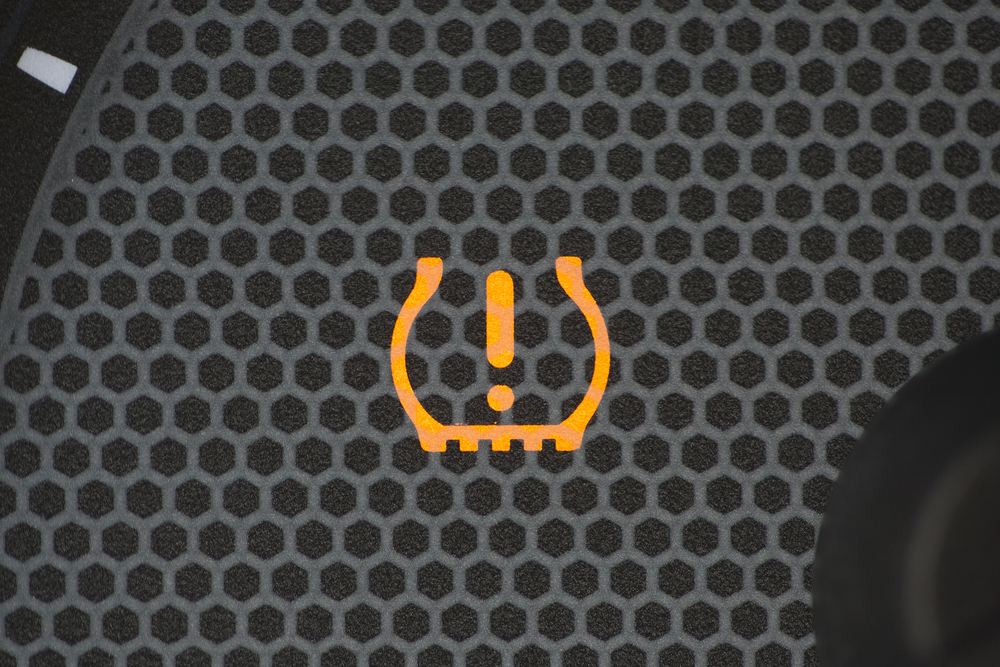
When the TPMS Light is on, it is important to take the following precautions:
As soon as the TPMS Light comes on, check the tire pressure in all four of your tires. If one of the tires has low air, add air until the pressure reaches the manufacturer’s specifications, which can be found on the inside of the driver's side door panel. In addition, the TPMS Light may come on if the tire pressure is too high. If this is the case, check the pressure of all four tires and take air out as needed.
If the TPMS Light comes on while you are driving, find the nearest gas station and check the pressure of the tires. Driving too long on underinflated tires can cause the tires undue wear, reduce gas mileage, and present safety hazards.
Sometimes the TPMS Light goes on and off, which can be due to fluctuating temperatures. If the pressure drops overnight, then increases during the day, the light may turn off once the vehicle warms up or once the temperature rises during the day. If the light comes back on once the temperatures cools down, you will know the weather is causing the pressure in the tires to fluctuate. It is a good idea to check the tires and add or take away any air as needed.
If the TPMS Light flashes for 1 to 1.5 minutes after you start your car, then remains on, this means the system is not functioning correctly. A mechanic should look at your vehicle as soon as possible. If you do need to drive, be careful as the TPMS system will no longer alert you of low tire pressure.
Driving with the TPMS Light on is not a good idea as it means one of your tires is underinflated. This can cause undue wear on the tire and potentially lead to a tire failure. Be sure to refer to your owner’s manual for specific instructions for monitoring your TPMS system, as manufacturers may set their TPMS lights to trigger differently.
Tuesday, 11 October 2016
Six Ways You Could be Killing Your Car Slowly
Owning a car can be a dream or a nightmare depending on how well you take care of your vehicle, the following are six things that many motorists do that can harm their car and their wallet.

- Ignoring the check engine light: Ignoring an illuminated check engine light can result in serious engine trouble and costly repairs. At the very least, this warning light could alert you to an engine problem that is negatively impacting fuel economy.
- Failing to change fluids and filters.Many fluids are required for the operation and protection of vehicle systems and components. Checking fluid levels regularly, along with the filters, helps ensure that your vehicle runs dependably and extends vehicle life.
- Neglecting your tires. Your vehicle’s tires should be checked frequently for inflation and tread depth. Under inflated tires can wear out more quickly, needing to be replaced sooner, and can negatively impact safety, gas mileage and performance.
- Not following a service schedule.Because many car parts and components wear out or become damaged over time, vehicles need to be routinely serviced in order to perform optimally. Routine inspections and timely repairs will help keep your car running efficiently and will help you avoid more expensive repairs down the road.
- Keeping a dirty car. Allowing your car to go too long without a wash leads to buildup of damaging chemicals and dirt, increases the potential for rust from road salt and interferes with proper visibility needed for safe driving.
- Being a severe driver. Whether it’s stop-and-go traffic, extreme weather, rough roads or heavy loads, it can sometimes be difficult to limit severe driving conditions. However, you can drive smart and improve fuel economy by observing the speed limit; avoiding aggressive driving, including quick starts and stops; not hauling unnecessary items; and keeping your vehicle properly tuned.
Auto care isn’t always a top priority for car owners, hardly do they realize they are doing things that adversely affect the performance, safety and value of their car. Routine maintenance can go a long way toward saving money, avoiding headaches and protecting your vehicle investment.”
For your Genuine Car Parts, Visit www.autofactorng.com We will not only give you a Guarantee on our Genuine Car parts, we have certified Auto-Technicians who are readily available to help you with your car troubles.
Also, you can Join us on Tuesdays and Thursdays on Twitter for our Online Car Diagnostics Program from 10:00am – 01:00pm. This Service is absolutely FREE. Don’t let your Local mechanic fool you with jargons. Let’s put you through the dynamics of your car!
Wednesday, 14 September 2016
Understanding Your Vehicle’s Tyre
Understanding Your Vehicle’s Tyre
Your tyres are the only part of the car that has direct contact with the road. Tyres affect your vehicle handling, ride, braking, and safety. For optimum performance, tyres must have the correct air pressure, tread depth, balance and the wheels of the vehicle must be properly aligned.

While it's easy to overlook those four patches of rubber called your tyres, performing a few simple checks can yield better fuel economy and improved vehicle handling. Since most tyre damage and wear is a result of driving on tyres that are improperly inflated, tyre experts suggest checking your air pressure once a month.
Causes of Tyre Problems
Road hazards like potholes, glass and rocks are usually unavoidable. There are, however, three main causes of tyre problems that are avoidable: incorrect inflation pressure, speeding and overloading. Taking precautionary measures to avoid them will ensure safer mobility and longer tyre life.
Make sure you have the right tyres
The speed and load ratings for your tyres should match those of the original tyres that came with the car, you should never fit a tyre with a lower speed rating or load rating than the manufacturer recommends for the car.
Maintain the right tyre pressure
Both under-inflating and over-inflating can wear your tyres out more quickly -- and can damage them more easily. Under-inflated tyres will wear out faster because they overheat. They also have a greater surface area contact with the road, which means increased rolling resistance -- and more fuel used. Over-inflated tyres can undermine road handling.
Check your tyres regularly
Don’t just check the tyre 'by eye' - and kicking it won't tell you much, either. Use a tyre pressure gauge to regularly check all the tyres at least once a month, and once a fortnight is even better. Make sure you check the spare tyre as well. Do the pressure check when the tyres are cold, as the heat of driving will raise the pressure reading.
Check the tread pattern to see that it meets the minimum 1mm tread depth -- although it's better to change the tyres long before they wear down to that level. Make sure you use valve caps to prevent road debris from damaging the valve, which could make it impossible to refill your tyre.
Look for damage
Have a thorough look for splits, bulges, cracks, and any objects stuck in the tread. If you see something like a nail or screw embedded in the tyre, do not pull it out. Drive carefully to a tyre retailer or service mechanic and let them remove it.
Cars are like human beings, proper care and maintenance is very key to the survival of a vehicle on Nigerian roads. AUTOFACTORNG will bring a solution to every of your car problems. We will not only give you a Guarantee on our Genuine Car parts, we have certified Auto-Technicians who are readily available to help you with your car troubles
Also, Customer satisfaction is one of our core values. AUTOFACTORNG is committed to bridging the gap between our customers and quality assured auto- products and auto-repair services, with quality and customer satisfaction being our watchword. We Sell 100% Genuine, We Sell Confidence. Visit www.autofactorng.com
Join us on Tuesdays and Thursdays on Twitter for our Online Car Diagnostics Program from 10:00am – 01:00pm. This Service is absolutely FREE. Don’t let your Local mechanic fool you with jargons. Let’s put you through the dynamics of your car!
Your tyres are the only part of the car that has direct contact with the road. Tyres affect your vehicle handling, ride, braking, and safety. For optimum performance, tyres must have the correct air pressure, tread depth, balance and the wheels of the vehicle must be properly aligned.

While it's easy to overlook those four patches of rubber called your tyres, performing a few simple checks can yield better fuel economy and improved vehicle handling. Since most tyre damage and wear is a result of driving on tyres that are improperly inflated, tyre experts suggest checking your air pressure once a month.
Causes of Tyre Problems
Road hazards like potholes, glass and rocks are usually unavoidable. There are, however, three main causes of tyre problems that are avoidable: incorrect inflation pressure, speeding and overloading. Taking precautionary measures to avoid them will ensure safer mobility and longer tyre life.
- Under or Over Inflation: Tyres that are under inflated or over inflated can affect your tyre life, driving comfort, traction and braking. Under inflation generates excessive flexing of the tyre casing, which results in overheating, increase of rolling resistance and premature wear. In extreme cases, under inflation can cause tyre damage. Likewise, over inflation can reduce tyre life, reduce grip and create irregular wear.
- Driving at Top Speed: Driving at high speeds has a greater chance of causing tyre damage than at low speeds. If contact is made with a road hazard, it has a greater chance of causing tyre damage. SpeedDriving at speed will cause the tyre a greater build up of heat, which can cause tyre damage. It can also contribute to a sudden tyre destruction and rapid air loss if the tyres are not properly maintained. Failure to control a vehicle if a tyre experiences sudden air loss can lead to an accident. If you see any damage to a tyre or wheel, replace it with your spare tyre at once, then have it checked by a tyre specialist.
- Overloading To ensure that your tyres are not overloaded, read the load index of your tyres, which is found on the tyre sidewall. Do not exceed the load capacity relative to this load index. Tyres that are loaded beyond their maximum loads can build up excessive heat that may result in sudden tyre destruction. Also follow your manufacturer's loading recommendations. Do not exceed the maximum axle load rating for any axle on your vehicle.
Make sure you have the right tyres
The speed and load ratings for your tyres should match those of the original tyres that came with the car, you should never fit a tyre with a lower speed rating or load rating than the manufacturer recommends for the car.
Maintain the right tyre pressure
Both under-inflating and over-inflating can wear your tyres out more quickly -- and can damage them more easily. Under-inflated tyres will wear out faster because they overheat. They also have a greater surface area contact with the road, which means increased rolling resistance -- and more fuel used. Over-inflated tyres can undermine road handling.
Check your tyres regularly
Don’t just check the tyre 'by eye' - and kicking it won't tell you much, either. Use a tyre pressure gauge to regularly check all the tyres at least once a month, and once a fortnight is even better. Make sure you check the spare tyre as well. Do the pressure check when the tyres are cold, as the heat of driving will raise the pressure reading.
Check the tread pattern to see that it meets the minimum 1mm tread depth -- although it's better to change the tyres long before they wear down to that level. Make sure you use valve caps to prevent road debris from damaging the valve, which could make it impossible to refill your tyre.
Look for damage
Have a thorough look for splits, bulges, cracks, and any objects stuck in the tread. If you see something like a nail or screw embedded in the tyre, do not pull it out. Drive carefully to a tyre retailer or service mechanic and let them remove it.
Cars are like human beings, proper care and maintenance is very key to the survival of a vehicle on Nigerian roads. AUTOFACTORNG will bring a solution to every of your car problems. We will not only give you a Guarantee on our Genuine Car parts, we have certified Auto-Technicians who are readily available to help you with your car troubles
Also, Customer satisfaction is one of our core values. AUTOFACTORNG is committed to bridging the gap between our customers and quality assured auto- products and auto-repair services, with quality and customer satisfaction being our watchword. We Sell 100% Genuine, We Sell Confidence. Visit www.autofactorng.com
Join us on Tuesdays and Thursdays on Twitter for our Online Car Diagnostics Program from 10:00am – 01:00pm. This Service is absolutely FREE. Don’t let your Local mechanic fool you with jargons. Let’s put you through the dynamics of your car!
Subscribe to:
Posts (Atom)